Uncategorized
Relaxing Hobby Ideas That Keep You Engaged
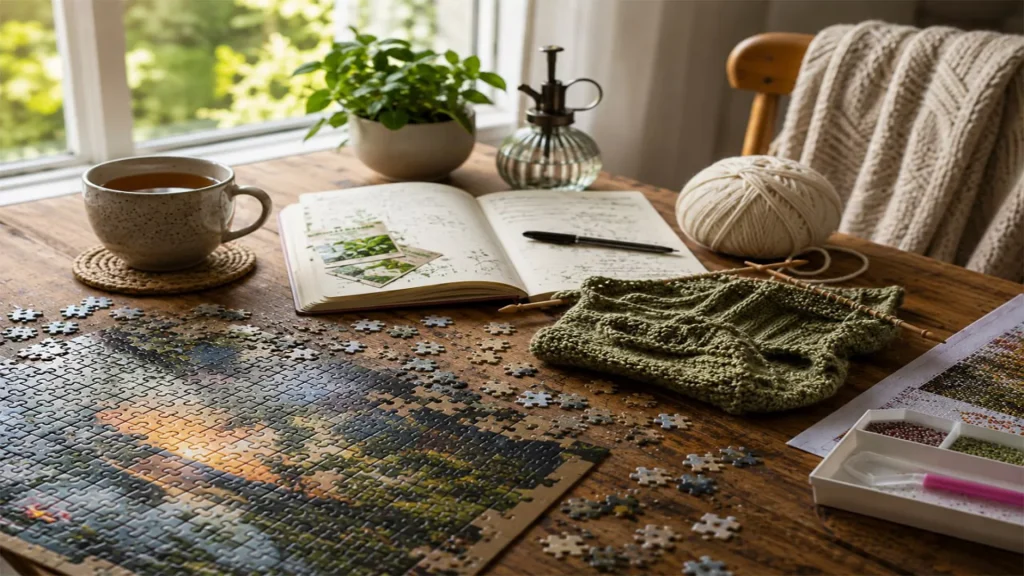
If you ask ten people how they relax, you’ll probably get ten different answers.
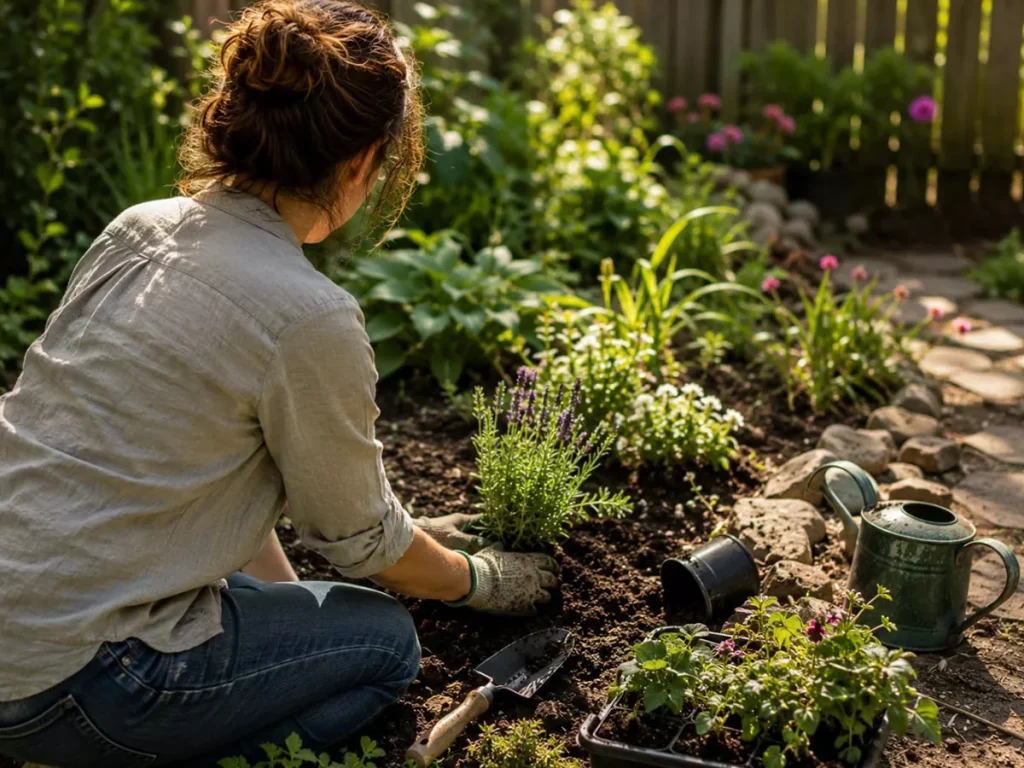
Some people head to the gym. Others watch a movie. Some pick up a book, while others spend an evening working in the garden.
What’s interesting is that many hobbies people describe as “relaxing” don’t actually involve doing nothing. In fact, most require some level of focus and effort. Someone building a model kit is concentrating. Someone working on a jigsaw puzzle is actively searching for pieces. A gardener is digging, planting, and pruning.
Yet these activities rarely feel exhausting in the same way work does.
That’s because relaxing hobbies tend to occupy a unique middle ground. They keep your mind engaged without overwhelming it. You’re focused on one task, but you’re not dealing with deadlines, expectations, or consequences if you make a mistake.
The activity becomes the point.
The Common Thread Behind Many Relaxing Hobbies
At first glance, hobbies like knitting, gardening, woodworking, diamond painting, and puzzles don’t seem to have much in common.
One involves yarn. Another involves plants. One takes place in a workshop while another happens at the kitchen table.
However, they share several characteristics that help explain why people find them relaxing.
Many popular hobbies offer:
- A clear next step
- Repetitive actions
- Visible progress
- Low pressure
- A break from screens
- Enough focus to keep your attention
Take gardening as an example. You don’t need to constantly decide what comes next. There’s usually a straightforward task waiting for you. Pull weeds, water plants, trim a section, or prepare a bed for planting.
The same principle applies to puzzles. You’re not trying to solve ten different problems at once. You’re looking for the next piece.
That simplicity is often what people find refreshing.
Why Repetition Isn’t As Boring As It Sounds
Repetition gets a bad reputation.
Most of us associate repetitive tasks with chores or routine work. But hobbies reveal something different. Repetition isn’t necessarily boring when there’s a sense of progress attached to it.
Think about activities that people happily spend hours doing:
- Crochet
- Knitting
- Cross-stitch
- Model building
- Diamond painting
On paper, many of these hobbies involve repeating the same action hundreds or even thousands of times.
Yet that’s often part of the appeal.
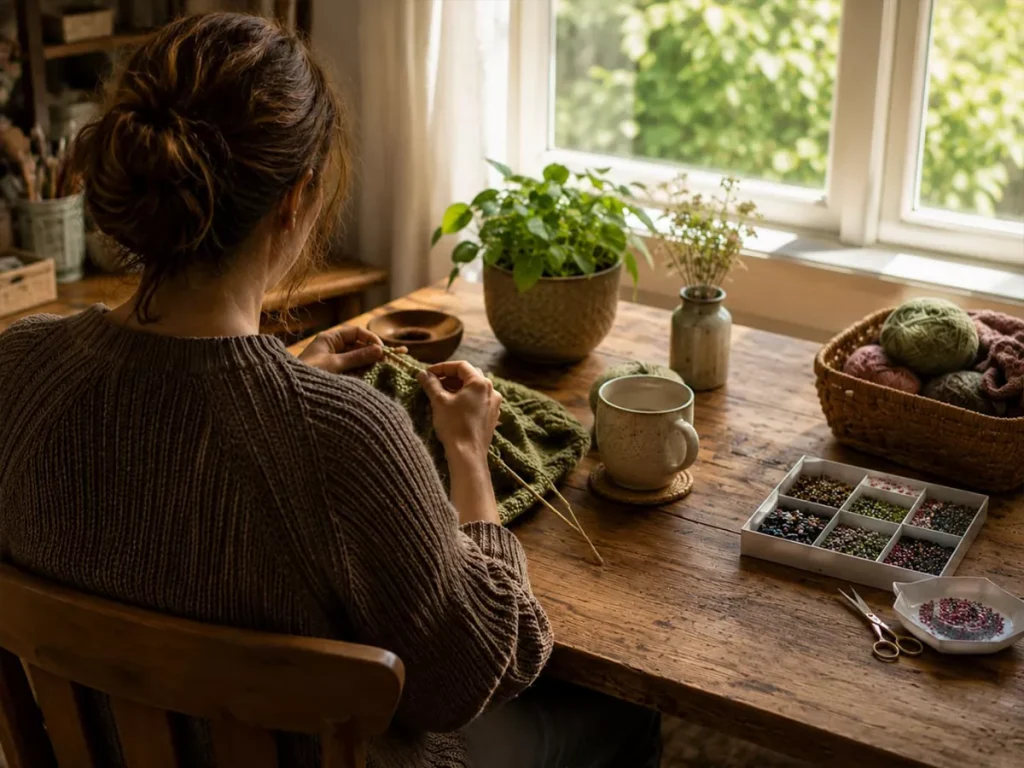
Once you understand the basics, you stop thinking about every individual step. Instead, the activity develops a rhythm. Your hands know what they’re doing, and your attention settles into the task.
For many people, that’s a welcome change from the constant interruptions of everyday life.
The Difference Between Entertainment And Engagement
One reason hobbies remain popular despite endless entertainment options is that they offer something different.
Streaming a television series can be enjoyable. So can scrolling through social media or watching videos online.
But those activities are mostly passive. Hobbies require participation. You’re building something, organizing something, creating something, or improving something.
That doesn’t make hobbies superior to entertainment, but it does create a different experience. After spending an hour watching videos, it’s common to wonder where the time went. After spending an hour on a hobby, you usually have something to show for it.
That might be:
- A completed section of a puzzle
- A newly planted flower bed
- A finished model
- Several pages in a sketchbook
The feeling is subtle, but it’s real.
Why Visible Progress Matters More Than People Think
One thing many adults don’t get enough of is immediate feedback. Work projects can take weeks or months to show results. Long-term goals often take even longer. Hobbies provide something different. Progress is easier to see.
You can spend forty-five minutes working on something and immediately notice a change. The project is closer to completion than it was before. This is one reason hobbies with large projects broken into smaller steps tend to be so satisfying.
You don’t need to finish everything in one sitting.
You simply need to move forward.
Whether it’s adding a few rows to a knitting project or completing a section of a painting, small wins accumulate surprisingly quickly.
The Appeal Of Hobbies That Don’t Require Special Talent
A lot of people avoid trying new hobbies because they assume they’ll be bad at them.
The reality is that many relaxing hobbies don’t require advanced skills to get started.
Some of the most beginner-friendly hobbies include:
- Gardening
- Adult coloring books
- Jigsaw puzzles
- Paint by numbers
- Diamond painting
- Cross-stitch
- Lego building
- Model kits
You don’t need years of training to enjoy any of them.
In many cases, the enjoyment comes from the process rather than the final result.
That’s an important distinction because it removes pressure. You don’t need to create something perfect. You just need to enjoy spending time doing it.
Where Diamond Painting Fits In
Diamond painting has become one of the more popular creative hobbies in recent years, particularly among people looking for an activity that’s structured but still creative.
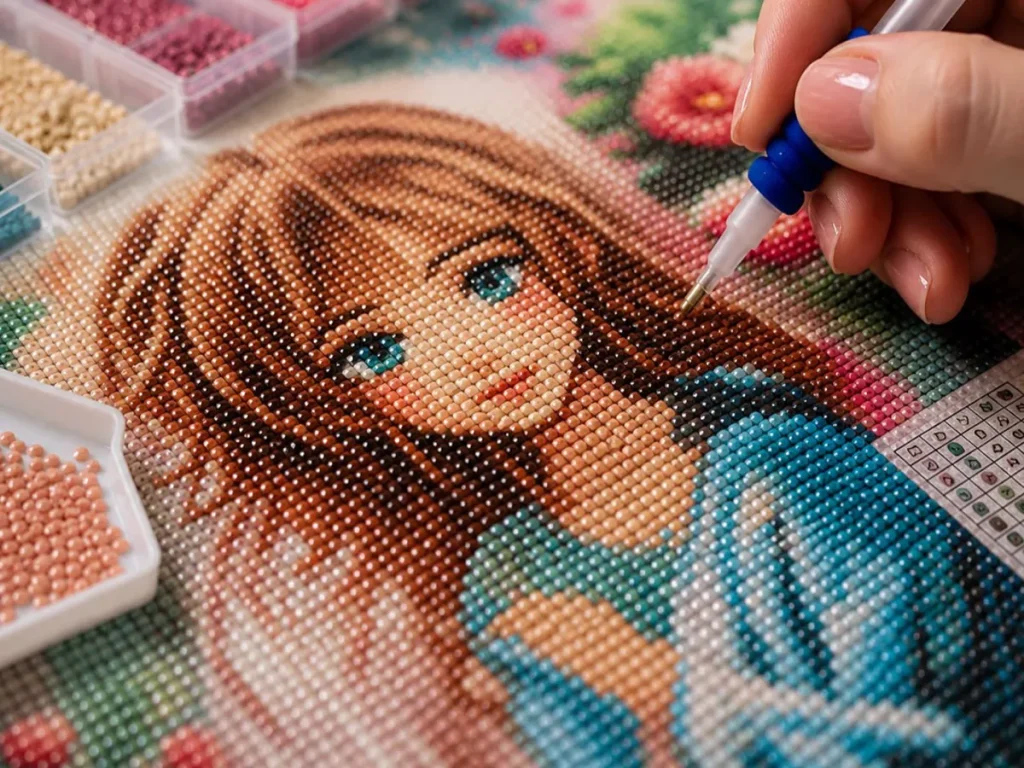
The process is straightforward. A coded canvas contains symbols that correspond to different colors. Small resin drills are placed onto the matching symbols until an image gradually appears. What attracts many people isn’t necessarily the finished artwork. It’s the experience of working on it.
The hobby combines several qualities that people often look for when searching for relaxing hobby ideas:
- Repetition without boredom
- Clear progress
- Minimal learning curve
- Flexible time commitment
- Creative involvement
You can work on a project for fifteen minutes before dinner or spend an entire afternoon completing a large section.
Like puzzles, knitting, or model building, it gives people a simple task to focus on while temporarily setting aside everything else.
Choosing A Hobby You’ll Actually Stick With
When exploring relaxing hobby ideas, it’s easy to focus on what’s popular rather than what’s practical.
The best hobby isn’t always the one with the largest online community or the most impressive finished results.
Instead, consider questions like:
- How much time do you realistically have?
- Do you prefer indoor or outdoor activities?
- Would you rather create something or solve something?
- Do you enjoy working with your hands?
- Are you looking for structure or complete creative freedom?
The answers matter more than trends. A hobby only becomes relaxing if it fits naturally into your life. Otherwise, it risks becoming another obligation on your to-do list.
Final Thoughts
The most relaxing hobbies aren’t necessarily the easiest ones, nor are they always the most exciting.
What many of them share is a combination of focus, simplicity, and progress. They give your attention somewhere to settle for a while without demanding constant decisions or creating unnecessary pressure.
Whether it’s gardening, knitting, woodworking, puzzles, or diamond painting, the goal isn’t usually to become an expert. It’s to spend an hour or two doing something that feels enjoyable for its own sake.
In a world filled with notifications, deadlines, and distractions, that simple experience is probably more valuable than it gets credit for.
Discover Our Most Loved Kits
Extra Fine Pen For 5D Diamond Paintings
29.85 $Original price was: 29.85 $.22.85 $Current price is: 22.85 $.Diamond Painting Kit Paw Patrol | Premium DIY Artwork
Kentucky Wildcats Basketball Team – Diamond Paintings
Arkansas Logo – Diamond Paintings